From idea to a product investors take seriously
Idea in. Working product, real users, and an investor-ready story out.
- products delivered, currently showing 13
- 100+
- weeks to a launchable MVP (standard program)
- ≤8
You need a product, real users and an investor-ready story, in weeks.
Building everything first
Six features, zero users. The product grows while the question it answers stays untested.
Six months of almost ready
Launch keeps slipping two weeks at a time. Money runs out before anyone learns anything.
Pitching without proof
A deck with no users and no metrics asks investors to take everything on faith.
Agencies that vanish
The build ships, the team disappears, and the founder inherits code nobody explained.
The workflow, station by station
01
Discovery & validation sprint
Week 0
- What happens
- Problem interviews, jobs to be done, competitor teardown, a test of the riskiest assumption, and the metrics that will define success.
- What you get
- Validation memo
- Target-user profile
- Metric definitions
- Go/no-go recommendation
- Your role
- Four to six hours of interviews and decisions
- Our role
- Research, synthesis and facilitation
02
Scope & architecture
Week 1
- What happens
- Cut the product to one core loop, choose a stack for speed and scale, plan data and AI, and lay out the build week by week.
- What you get
- MVP scope document
- Architecture
- Clickable flow
- Fixed build plan
- Your role
- Approve the scope and name the one thing that must work
- Our role
- Design the system and estimate honestly
03
Build in weekly sprints
Weeks 2–5
- What happens
- Design system, then the core loop, then AI and automation features, then integrations. A live demo every week, a staging URL, analytics from day one.
- What you get
- Working product every week
- Staging URL
- Demo recordings
- Your role
- One weekly demo and fast feedback
- Our role
- Design, engineering, QA and security
04
Launch & learn
Week 6
- What happens
- Beta users onboarded, feedback loops running, the metrics dashboard live, and fixes shipped daily.
- What you get
- Live product
- Onboarding flow
- Metrics dashboard
- Feedback log
- Your role
- Bring the first users and join the calls
- Our role
- Launch, monitor and iterate
05
Pitch readiness
Week 7
- What happens
- Investor narrative, deck, live demo, demo video, one-pager and a mock Q&A session.
- What you get
- Deck
- Demo video
- One-pager
- Q&A preparation document
- Your role
- Rehearse and refine the story
- Our role
- Narrative, design and coaching
06
Raise readiness
Week 8
- What happens
- Readiness scored, the data room assembled, and the KPI dashboard and financial model built.
- What you get
- Data room
- Financial-model template
- KPI dashboard
- Your role
- Own the outreach and the conversations
- Our role
- Prepare, review and support
07
Scale or partner
Ongoing
- What happens
- Roadmap, fractional CTO, hiring support, managed AI and maintenance, whichever shape the next stage needs.
- What you get
- Roadmap
- Ongoing team options
- Your role
- Decide the model
- Our role
- Keep building with you
Pitch with a product, not a promise
By week seven you have a working product and real usage. We turn that into a story investors can follow and a demo they can click.
Investor narrative
Problem, insight, product, traction, ask: one line of argument that survives questions.
Deck design
Twelve to fifteen slides, designed to be read in two minutes and presented in ten.
Live demo and demo video
A rehearsed live path through the product plus a 90-second video for cold outreach.
Metrics that matter
Activation, retention and revenue or pipeline, pulled from the product analytics we instrumented.
One-pager and mock Q&A
A one-page summary and a recorded practice session with the hard questions asked first.
Ready for a first round
Readiness is a checklist, not a feeling. We build the evidence and the documents, then you run the conversations.
We make you ready and credible. Investors make their own decisions. We don't guarantee funding, valuations, or introductions, and we never charge for introductions.
Readiness scorecard
Team, problem clarity, product, traction, market and ask, scored honestly with what to fix first.
KPI dashboard
Live numbers from real product analytics, not a spreadsheet updated the night before.
Data-room checklist
The documents investors ask for, in the order they ask for them.
Financial-model template
A three-year, assumptions-driven model you can defend line by line.
Warm-intro preparation
Target-list criteria, outreach copy and a follow-up cadence you run yourself.
Readiness scorecard
- Team
- 20%
- Problem clarity
- 15%
- Product
- 25%
- Traction
- 25%
- Market
- 10%
- Ask
- 5%
Three ways to work together
Fixed-scope MVP
IndicativeA fixed price and timeline for a defined scope. You own all of the IP and code.
Best for: Founders with a clear scope who want certainty on price and dates.
- Fixed price agreed in writing before work starts
- Weekly demos; scope changes re-quoted in writing
- Full IP and code ownership from the first commit
Venture partnership
IndicativeA reduced cash fee plus equity or revenue share. Selective: a few founders per quarter.
Best for: Early founders with a strong problem and team, and a limited cash budget.
- Reduced cash fee plus equity or revenue share
- Indicative terms, subject to a written agreement
- You keep the company and the code
Fractional CTO / ongoing team
IndicativeA monthly engagement after launch: roadmap, hiring, architecture, managed AI and maintenance.
Best for: Launched products needing senior technical leadership without a full-time hire.
- Monthly engagement, cancel with notice
- Roadmap, hiring and architecture ownership
- Managed AI and maintenance included
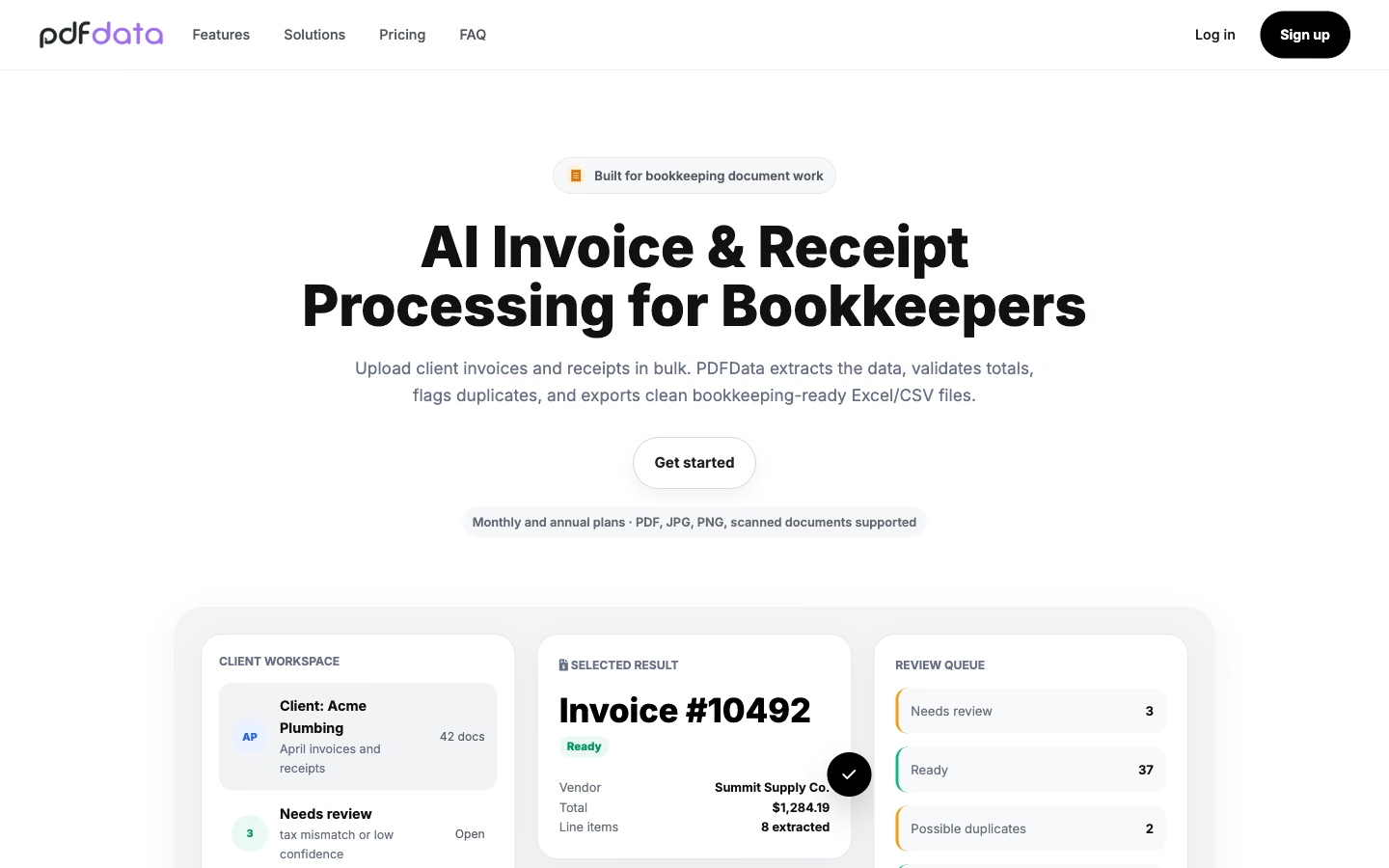
AI invoice and receipt processing to Excel, CSV and JSON
Designed and developed for the client: extraction pipeline, bulk processing and the export and API surface.
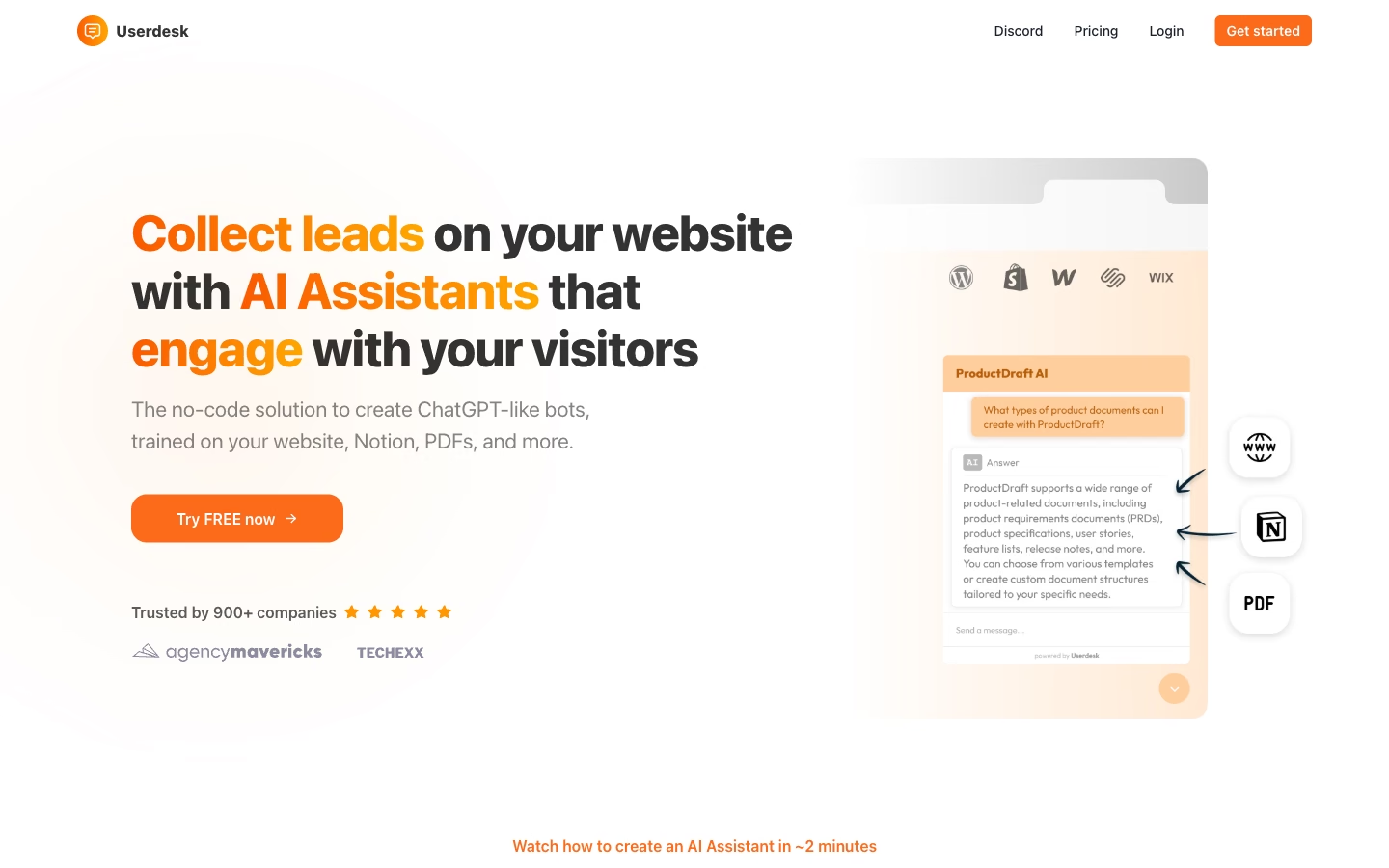
No-code AI support and lead assistant trained on your site, Notion, PDFs and Drive
Designed and developed for the client: retrieval pipeline, the embeddable assistant and the lead hand-off flow.
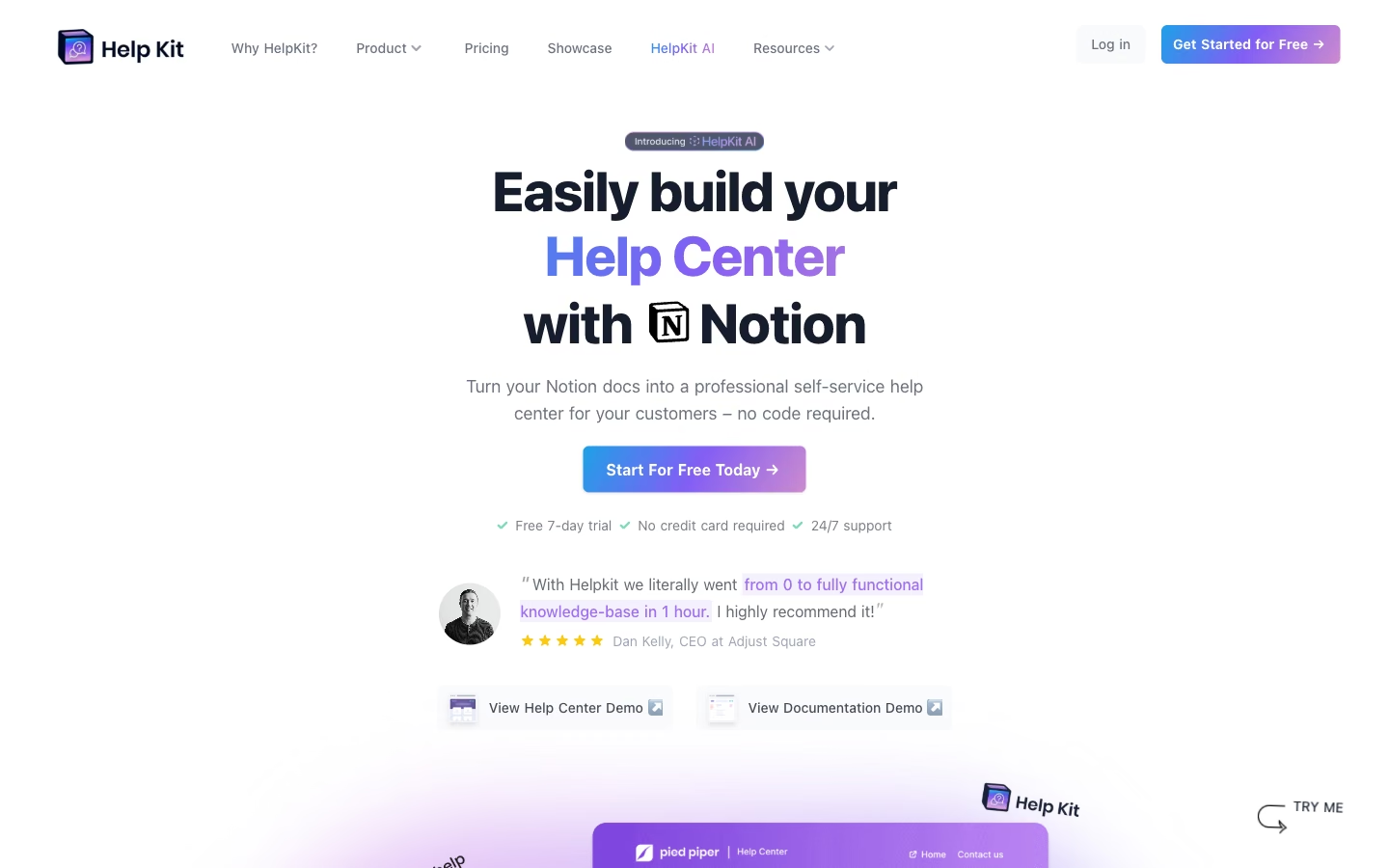
Notion to help center with AI support
Designed and developed for the client: the Notion-to-help-center renderer, search and the AI answer layer.
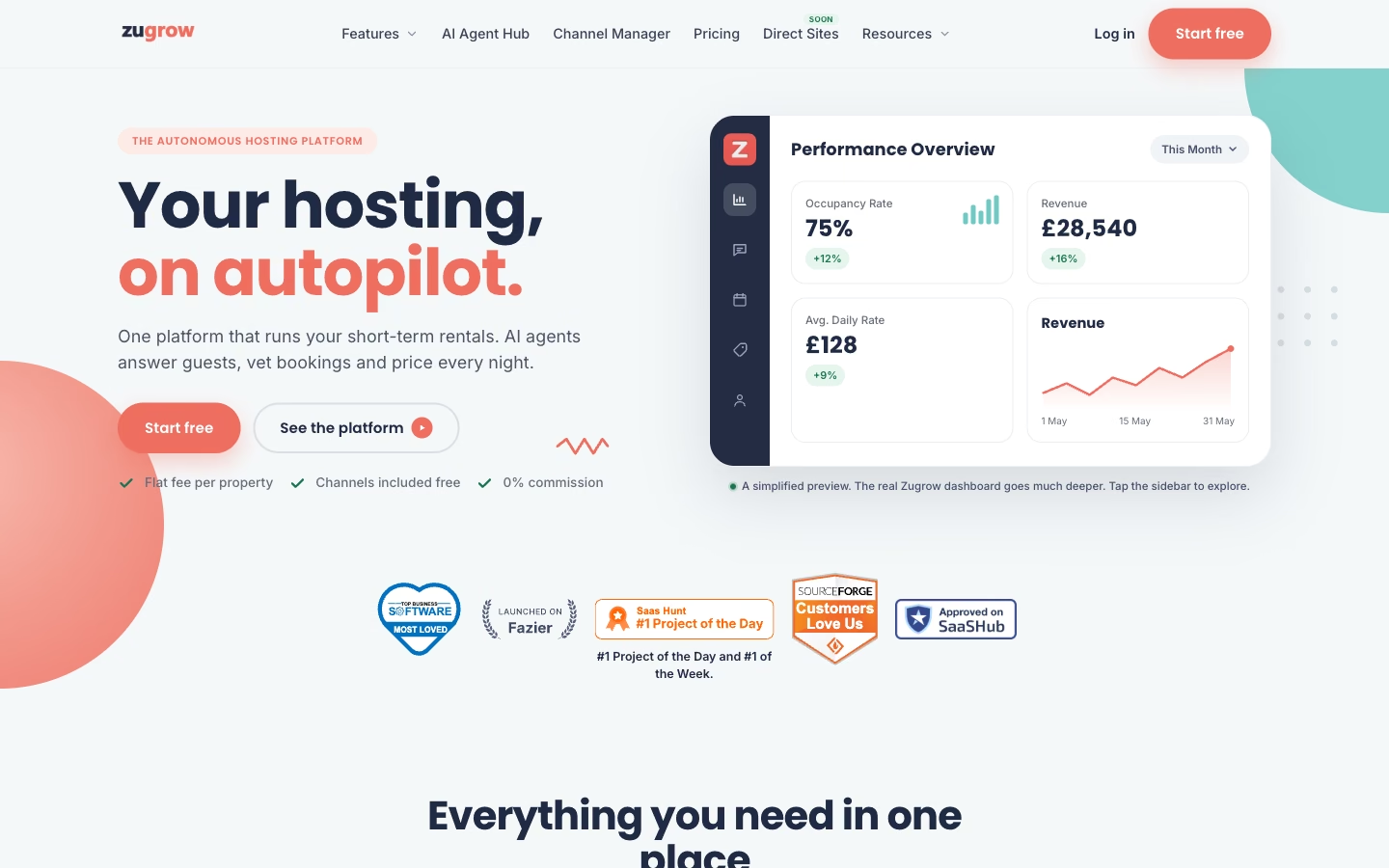
AI agents for property and vacation-rental operations
Designed and developed for the client: agent workflows, guest communication and the pricing automation surface.
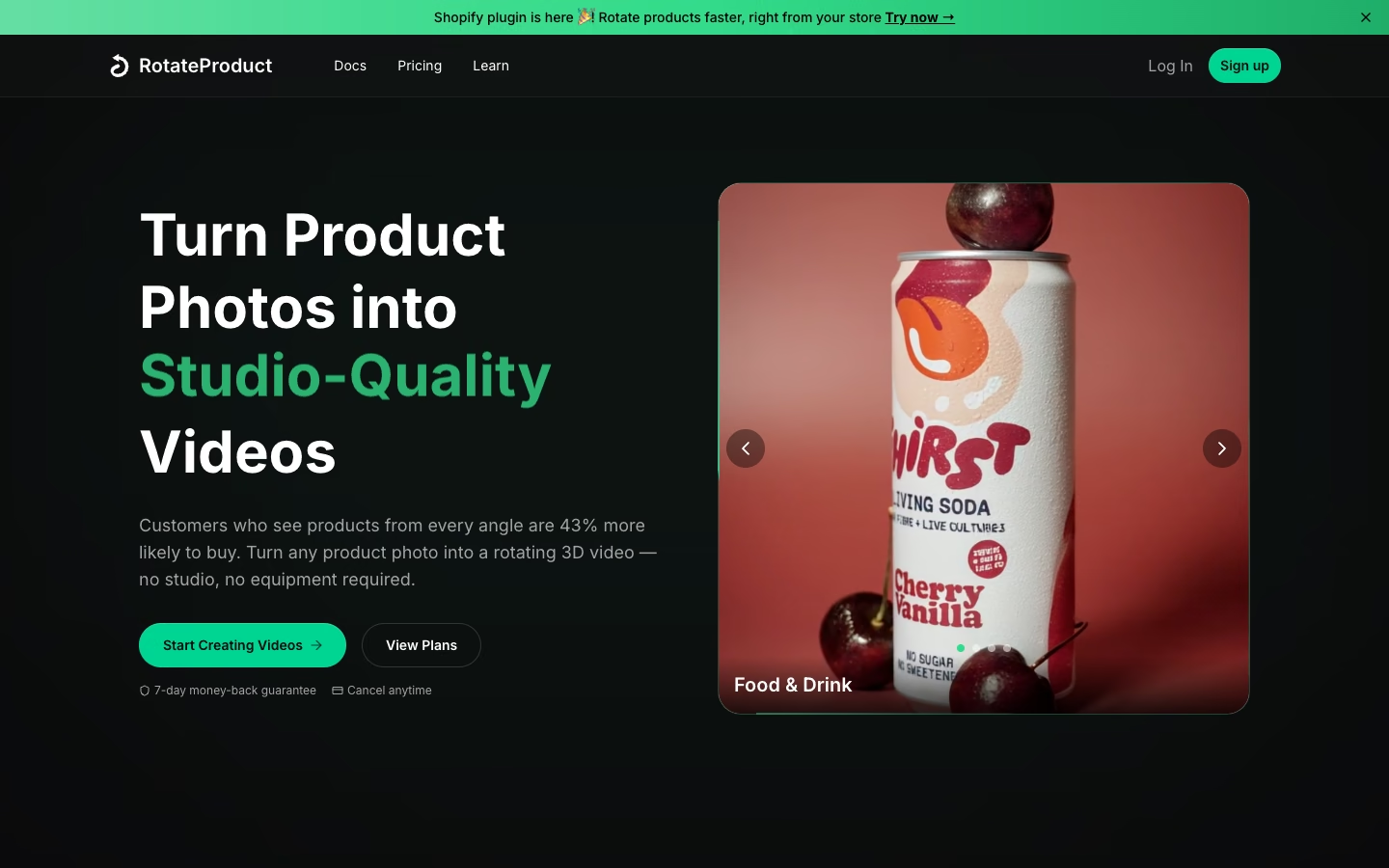
AI product photo to rotating video for e-commerce
Designed and developed for the client: the product-photo to rotating-video pipeline and the self-serve plan flow.
- Booking and payments platform
Commission-free direct booking and payments for tourism businesses
Designed and developed for the client: direct-booking flow, availability handling and commission-free payments.
Is this for you?
This is for you if
- A decision-maker available every week
- A real problem you can describe in one sentence
- Willingness to launch to real users within weeks
- A budget, or openness to the venture model
This is not for you if
- Building everything before validating anything
- No time for a weekly demo
- Looking for a funding guarantee rather than readiness
- Unwilling to talk to users
Apply to build with us
We reply within two working days.
Founder questions
Who owns the IP and code?
You do, from the first commit. Repositories, cloud accounts, domains and data stay in your name, and the venture model does not change that: equity or revenue share is a commercial term, never a claim on your product.
Do you sign NDAs?
Yes. Send yours or use ours before the first call. We also keep every application and discovery conversation confidential by default, whether or not we end up working together.
How long does an MVP take?
Our standard program runs eight weeks: discovery in week zero, scope in week one, four build sprints, then launch to real users with a metrics dashboard in week six. Weeks seven and eight cover pitch readiness and raise readiness. Larger scopes are split into phases with their own launches.
What if we pivot mid-build?
It happens, and the weekly demo exists to catch it early. We re-scope in writing, agree what changes in the plan and the price, and keep the parts of the product that still serve the new direction.
What does it cost?
It depends on the model: a fixed price for a defined scope, a reduced cash fee plus equity or revenue share under the venture model, or a monthly fee for a fractional CTO and team. Every figure is indicative until it is written into an agreement.
How does the venture partnership work?
We take on a few founders per quarter where the problem, the team and the timing fit. You pay a reduced cash fee and we agree equity or a revenue share in a written contract. You still own the company and the code, and terms are indicative until signed.
Do you introduce us to investors?
Sometimes, where our network genuinely fits, but an introduction is never part of the deal, and we never charge for one. What we prepare is readiness: a credible story, real metrics and a complete data room. We do not guarantee funding, valuations or introductions. Investors make their own decisions.
What happens after launch?
You choose: hand over with documentation and a runbook, keep us on as a fractional CTO and team, or move into maintenance and managed AI. Many founders keep the weekly rhythm going while the roadmap takes shape.
Bring the idea. Leave with a plan.
Apply in four short steps, or book five minutes and talk it through first.