Skip to content

Cloud / DevOps

AWS, Azure and GCP: CI/CD, deployment automation, monitoring and infrastructure that scales.

The problem

Deployments that need a specific person, environments that drift, bills that surprise the finance team every quarter. Cloud is cheap and safe only when it is automated and watched. We set it up so shipping is routine and cost is a number you see every week.

What we build

  • CI/CD pipelines that test, build and deploy on every merge
  • Infrastructure as code for reproducible environments
  • Monitoring, alerting and incident routines with cost dashboards

CI/CD, Infrastructure as code, Monitoring, Incident response, Cost control

How it works

  1. 01

    Review

    Current infrastructure, deployment process, risks and spend, written up with priorities.

  2. 02

    Automate

    Pipelines and infrastructure as code, one environment at a time.

  3. 03

    Observe

    Metrics, logs, alerts and an on-call routine sized for your team.

  4. 04

    Optimize

    Right-sizing, reserved capacity and monthly cost reviews.

Work that proves it
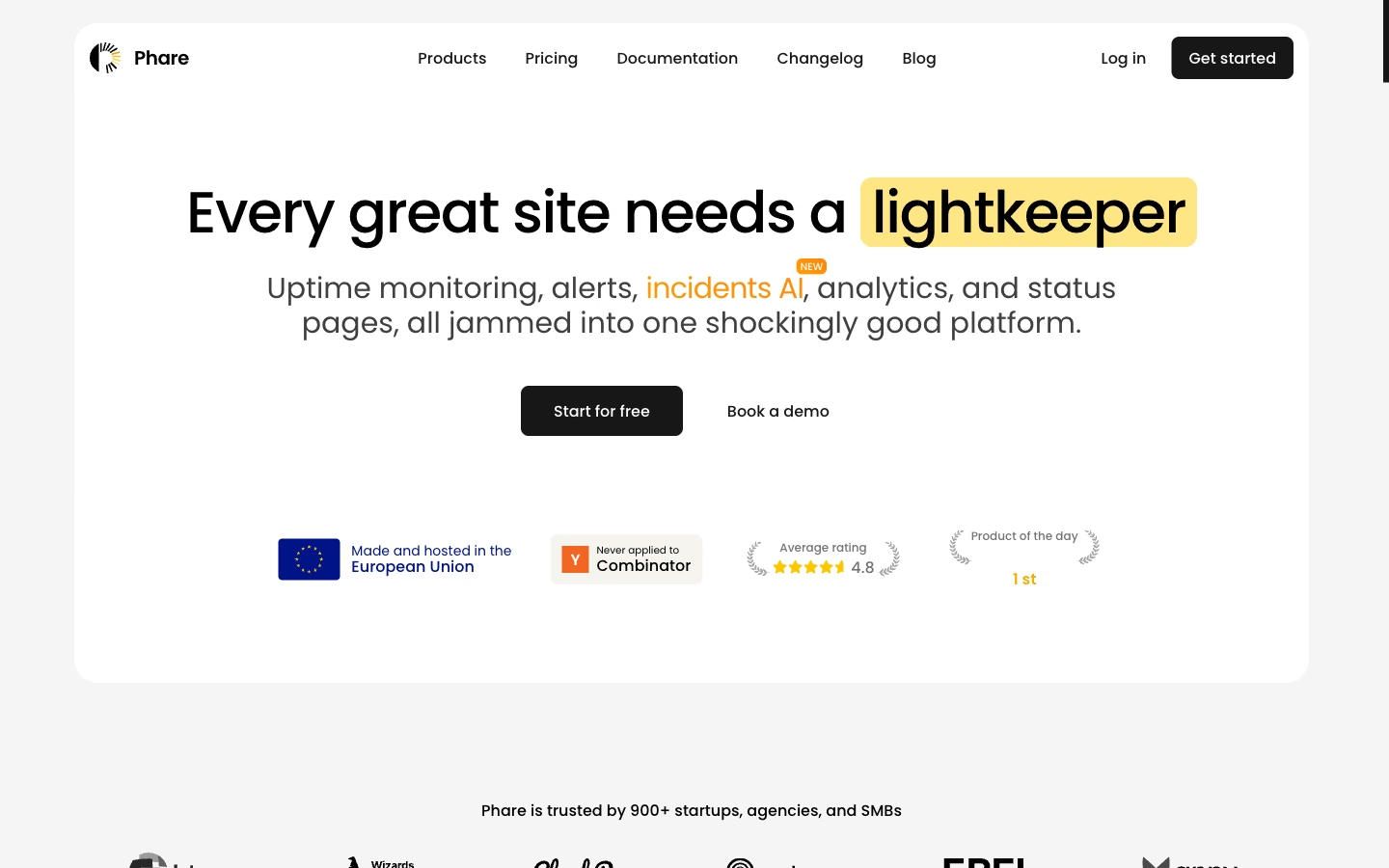
  • Phare home page: uptime monitoring, alerts, analytics and status pages on one platform

    Monitoring, incident management and status pages

    Designed and developed for the client: monitoring checks, incident flow and public status pages.
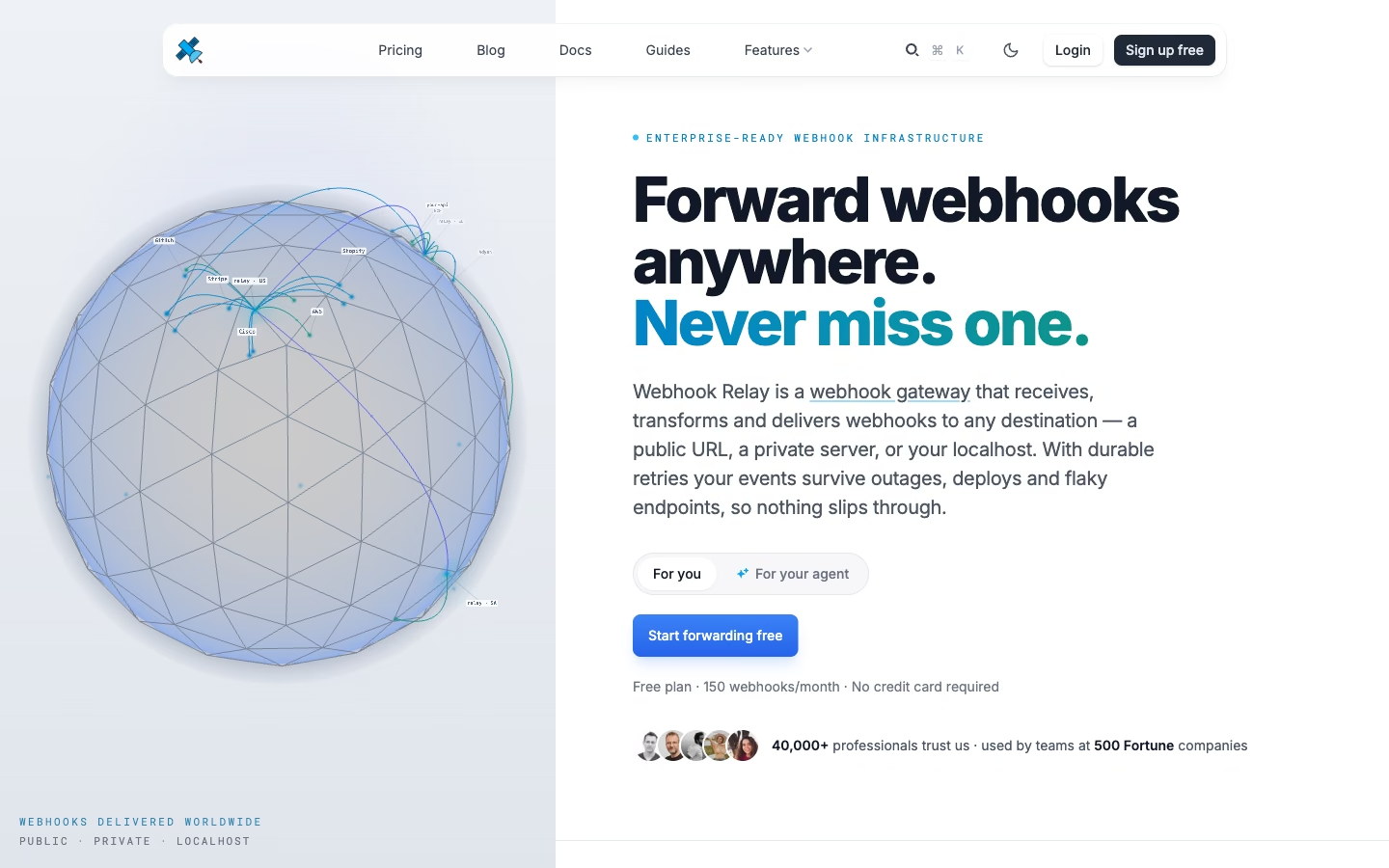
  • Webhook Relay home page: forwarding webhooks anywhere, beside a wireframe globe of connections

    Webhook and API infrastructure with SOC 2 Type II, SSO and audit logs

    Designed and developed for the client: webhook forwarding and replay, tunnels, and the audit and access-control surface.

What you get

  • Infrastructure review and plan

  • CI/CD pipelines

  • Infrastructure as code

  • Monitoring and alerting

  • Incident runbook

  • Monthly cost report

Questions

What's included in a cloud engagement?
An infrastructure review with priorities, then the work: pipelines that test, build and deploy on every merge, infrastructure as code so environments stop drifting, monitoring and alerting sized for your team, and an incident runbook. A monthly cost report comes with it, because cloud spend only stays sane when somebody looks at it.
How long does a move to the cloud take?
Two to six weeks. One application with a simple environment is the short end; several services, a database migration and compliance requirements push it out. We automate one environment at a time and start with the one that hurts most, so the first improvement lands in the first week or two rather than at the end.
What do you need from us?
Cloud access with permission to create infrastructure, the current deployment steps even if they only live in one person's head, and an hour with whoever gets called when it breaks. If there is a compliance boundary we must respect, we need it before the design rather than during the review.
Who owns the code and the data?
You do. Everything runs in your cloud accounts under your billing, and the pipelines and infrastructure code live in your repository, which is the point: infrastructure as code means the setup is readable and reproducible by whoever comes next. Handover is the runbook and a walkthrough of the on-call routine.
Can you work in our cloud account rather than yours?
That is the only way we work. We ask for a scoped role in your account, not a shared login, and every resource we create is tagged and described in code you keep. If you would rather we never hold standing access, we can work through short-lived credentials and pair with your team on each change.

Not sure where to start?

Describe the problem in a few lines. You get a straight answer on what we would build and how long it takes.

Book a 5-minute growth call