Skip to content

Mobile App Development

iOS, Android and cross-platform apps, including AI-native mobile products.

The problem

Mobile users forgive nothing: a slow first screen, a confusing sign-up or a crash on one device and they are gone. Add AI features and the constraints multiply: latency, offline states, cost per request. We design for the phone in the hand, not the mockup on the desk.

What we build

  • Cross-platform apps in Flutter or React Native, native where it matters
  • AI chat and assistant features with streaming responses and sensible offline states
  • In-app purchases, subscriptions and analytics wired from the first build

Flutter and React Native, Native iOS and Android, AI chat features, In-app purchases

How it works

  1. 01

    Define

    Core loop, platforms, offline needs and the monetization model.

  2. 02

    Design

    Flows and a component library tuned for touch, thumbs and small screens.

  3. 03

    Build

    Weekly builds on TestFlight and Play internal testing; crash and performance tracking on.

  4. 04

    Release

    Store listings, review submissions, staged rollout and the first update planned.

Work that proves it
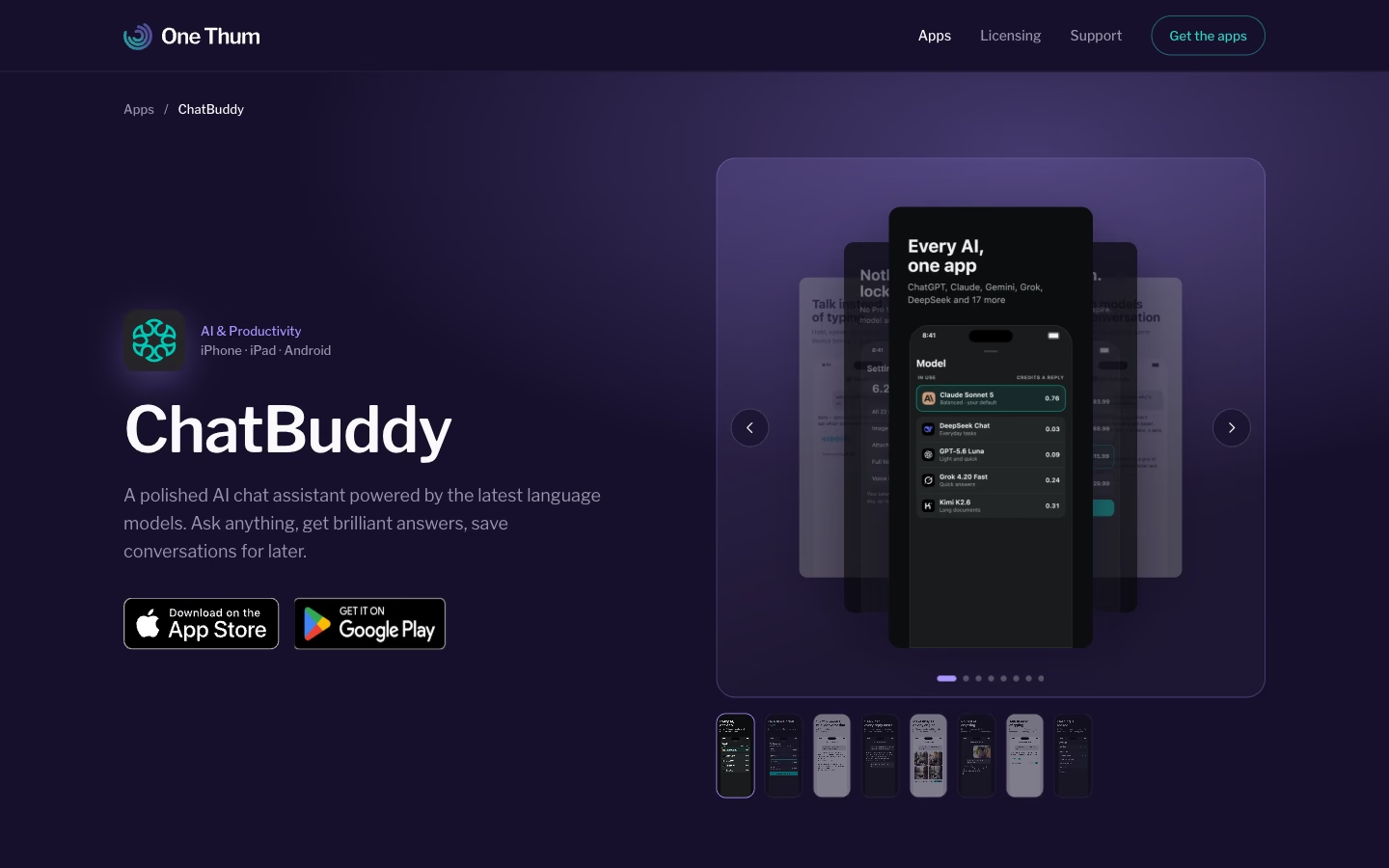
  • ChatBuddy home page: a dark hero with phone mockups and App Store and Google Play buttons

    Multi-model AI mobile app with in-app credits

    Designed and developed for the client: the mobile app, multi-model chat and in-app credit purchases.

What you get

  • Product definition and platform plan

  • Design system for mobile

  • iOS and Android builds

  • In-app purchase and subscription setup

  • Store listings and release notes

  • Analytics and crash reporting

  • Documentation

Questions

What's included in a mobile engagement?
A product definition and platform plan, a design system tuned for touch, then iOS and Android builds with in-app purchases or subscriptions set up. Store listings, release notes and a staged rollout are part of the work, as are analytics and crash reporting from the first build. You also get the documentation your team needs to ship the next update.
How long does it take to reach the app stores?
Eight to fourteen weeks, including store review, which is its own unpredictable week or two. What moves the range is whether native modules are needed, how much has to work offline, and whether payments run through the stores or your own billing. Weekly builds go out on TestFlight and Play internal testing from the second sprint.
What do you need from us?
Apple and Google developer accounts in your company's name, the brand assets, and someone who can answer store and privacy questions — data-collection disclosures need a person who knows what the app really stores. A handful of testers with real devices, including one old cheap Android, is worth more than a lab.
Who owns the code and the data?
You do. The repository is yours, and so are the store accounts, which is why we ask you to create them rather than publishing under ours — an app under an agency account is painful to move later. Handover includes the signing keys, the documentation and a release walkthrough.
Do we need separate iOS and Android builds?
Two builds ship either way; the question is whether they share one codebase. Flutter or React Native covers most products at roughly the cost of one app, and that is our default. We go native for a screen or a whole app when the product depends on platform features such as heavy camera work, background processing or tight hardware integration, and mixing the two per screen is normal.

Not sure where to start?

Describe the problem in a few lines. You get a straight answer on what we would build and how long it takes.

Book a 5-minute growth call